Vancouver's First Official Development Plan Is Now Law — What It Means for Modular
Charles Song
7 min read
Governmental Plan

Image: © City of Vancouver · vancouver.ca Used for editorial and informational purposes only.
Introduction
Vancouver has officially adopted its first-ever city-wide Official Development Plan — a statutory policy document that maps out how the city will grow and develop for the next 30 years. Approved by City Council on March 11, 2026 and coming into effect on March 31, the ODP replaces the Vancouver Plan and becomes the binding legal framework for all land use decisions across the city.
For anyone involved in land development, construction, or housing in Metro Vancouver, this is the most significant planning shift in a generation.
Introduction
Vancouver has officially adopted its first-ever city-wide Official Development Plan — a statutory policy document that maps out how the city will grow and develop for the next 30 years. Approved by City Council on March 11, 2026 and coming into effect on March 31, the ODP replaces the Vancouver Plan and becomes the binding legal framework for all land use decisions across the city.
For anyone involved in land development, construction, or housing in Metro Vancouver, this is the most significant planning shift in a generation.
Vancouver's ODP doesn't just change what you can build — it changes how fast you can build it, and where modular fits into that picture.
Vancouver's ODP doesn't just change what you can build — it changes how fast you can build it, and where modular fits into that picture.
1. What the ODP Actually Is
The ODP is not just a vision document — it is now law. All development in Vancouver must be consistent with it. Unlike the Vancouver Plan, which was a strategic policy framework, the ODP is adopted by bylaw and carries formal legal authority to guide rezonings, density approvals, and land use decisions across every neighbourhood.
Covers the entire city of Vancouver
Guides development for the next 30 years
Required by provincial legislation by June 2026
Replaces the Vancouver Plan while retaining its core directions
💡 Key point: The ODP gives developers and landowners something they've never had in Vancouver before — a city-wide, legally binding framework that makes future land use more predictable.
2. Density Is Going Up — Everywhere
The ODP responds directly to a significant imbalance in Vancouver's land use. Low-density residential areas currently consume about 65% of residentially zoned land but house only about 35% of the population. The ODP addresses this through:
Increased density around SkyTrain stations
Multiplex neighbourhoods throughout the city
Walkable village communities in residential areas
New housing options across all neighbourhoods
💡 Key point: More density means more projects — and more projects means more demand for efficient, cost-effective delivery methods like OSC.
3. Faster Approvals — A Game Changer for OSC
One of the most important changes the ODP brings is a new approvals process. Under new provincial legislation, the City of Vancouver is no longer permitted to hold public hearings for projects that are consistent with the ODP and have at least 50% residential floor area. This is designed specifically to speed up housing delivery.
No public hearing required for ODP-consistent projects
Faster rezoning and approval timelines
More predictable development pipeline
Standardized building forms increasingly favoured
💡 Key point: Faster approvals directly benefit modular and OSC projects — which are already faster to build. The compounding effect of shorter approval timelines plus shorter construction timelines is a major advantage for OSC delivery.
4. Modular Is Explicitly in the Frame
Industry experts have noted that if the ODP is implemented effectively, it is expected to drive a shift from bespoke, one-off projects toward more standardized, repeatable building forms — including mid-rise wood frame, mass timber, and modular or prefabricated systems. The policy conditions are now in place for modular to scale in Vancouver in ways that simply weren't possible before.
Standardized building forms increasingly favoured
Repeatable project types align with OSC's core strength
Volume demand creates opportunity for cost reduction through scale
OSC delivery timelines match accelerated approvals environment
💡 Key point: The ODP doesn't mention modular by name — but everything it creates points toward it.
1. What the ODP Actually Is
The ODP is not just a vision document — it is now law. All development in Vancouver must be consistent with it. Unlike the Vancouver Plan, which was a strategic policy framework, the ODP is adopted by bylaw and carries formal legal authority to guide rezonings, density approvals, and land use decisions across every neighbourhood.
Covers the entire city of Vancouver
Guides development for the next 30 years
Required by provincial legislation by June 2026
Replaces the Vancouver Plan while retaining its core directions
💡 Key point: The ODP gives developers and landowners something they've never had in Vancouver before — a city-wide, legally binding framework that makes future land use more predictable.
2. Density Is Going Up — Everywhere
The ODP responds directly to a significant imbalance in Vancouver's land use. Low-density residential areas currently consume about 65% of residentially zoned land but house only about 35% of the population. The ODP addresses this through:
Increased density around SkyTrain stations
Multiplex neighbourhoods throughout the city
Walkable village communities in residential areas
New housing options across all neighbourhoods
💡 Key point: More density means more projects — and more projects means more demand for efficient, cost-effective delivery methods like OSC.
3. Faster Approvals — A Game Changer for OSC
One of the most important changes the ODP brings is a new approvals process. Under new provincial legislation, the City of Vancouver is no longer permitted to hold public hearings for projects that are consistent with the ODP and have at least 50% residential floor area. This is designed specifically to speed up housing delivery.
No public hearing required for ODP-consistent projects
Faster rezoning and approval timelines
More predictable development pipeline
Standardized building forms increasingly favoured
💡 Key point: Faster approvals directly benefit modular and OSC projects — which are already faster to build. The compounding effect of shorter approval timelines plus shorter construction timelines is a major advantage for OSC delivery.
4. Modular Is Explicitly in the Frame
Industry experts have noted that if the ODP is implemented effectively, it is expected to drive a shift from bespoke, one-off projects toward more standardized, repeatable building forms — including mid-rise wood frame, mass timber, and modular or prefabricated systems. The policy conditions are now in place for modular to scale in Vancouver in ways that simply weren't possible before.
Standardized building forms increasingly favoured
Repeatable project types align with OSC's core strength
Volume demand creates opportunity for cost reduction through scale
OSC delivery timelines match accelerated approvals environment
💡 Key point: The ODP doesn't mention modular by name — but everything it creates points toward it.
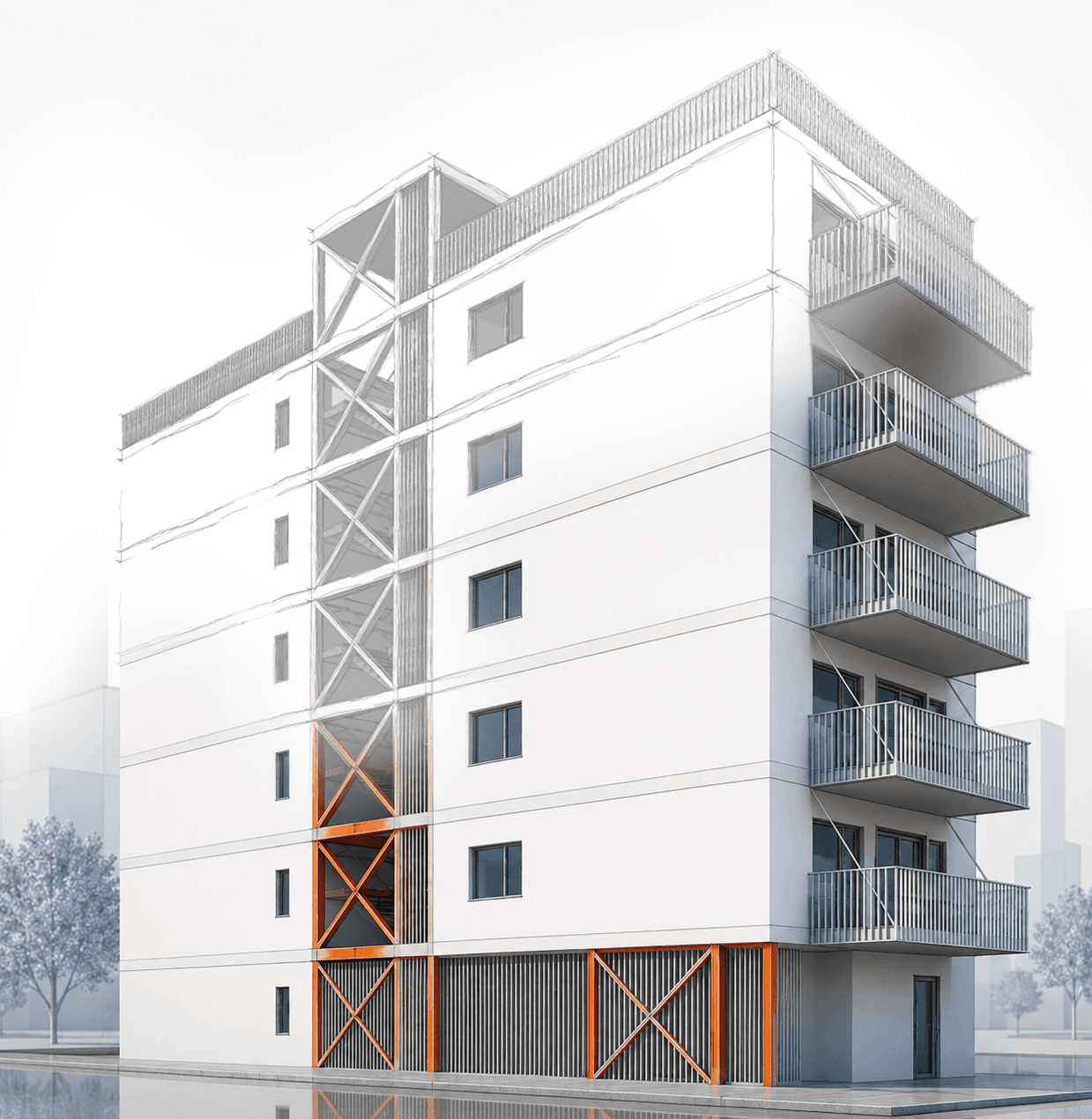
Conclusion
Vancouver's ODP is not just a planning document — it is the clearest signal yet that the future of construction in this city is standardized, scalable, and fast. For landowners, developers, and institutions thinking about their next project, the question is no longer whether density is coming. It is whether you are ready to deliver it efficiently.
Off-site construction is the most effective answer to that question. BuildMAX exists to make that answer a reality.

